Welcome to WordPress. This is your first post. Edit or delete it, then start writing!
Why Safety Matters in 2026
Restaurants face rising regulatory expectations, higher insurance scrutiny, and increased operational risks. Compliance is no longer about meeting minimum standards — it requires proactive systems, documented training, and verifiable performance.
"What methods and tools should you know on maintaining low injuries / incident/s KPI, control workers compensation costs, and build a strong safety culture that protects both people and establishment?"
Core OSHA Standards for Restaurants
01
Fire Safety
We will work with you to create a personalised plan to help you achieve your financial goals.
02
Electrical Safety
We will work with you to create a personalized plan to help you achieve your financial goals.
03
Emergency Action Plans
Evacuation routes, Emergency contacts, Staff roles and drills
04
TRAINING & ONBOARDING
Safety Orientation & Required Training
A structured onboarding program reduces injuries and ensures every employee starts with the same safety foundation.
New‑Hire Orientation Includes:
Reporting hazards, injuries, and near misses, Workplace hazards overview, PPE use and expectations
Knife and equipment safety, Chemical handling & SDS review, Fire extinguisher basics, Emergency procedures
05
Ongoing Training Requirements:
Annual refresher training
Quarterly toolbox talks
Job‑specific equipment training
Documented sign‑offs for all training
A consistent training system strengthens compliance and reduces turnover.
Work staff uniformed communication of expectation, understanding and common goals.
06
PPE Requirements.
Gloves, aprons, slip‑resistant footwear,
Weekly inspections and replacements,
Training integrated into onboarding
06
Injury Rate Management & Performance Tracking
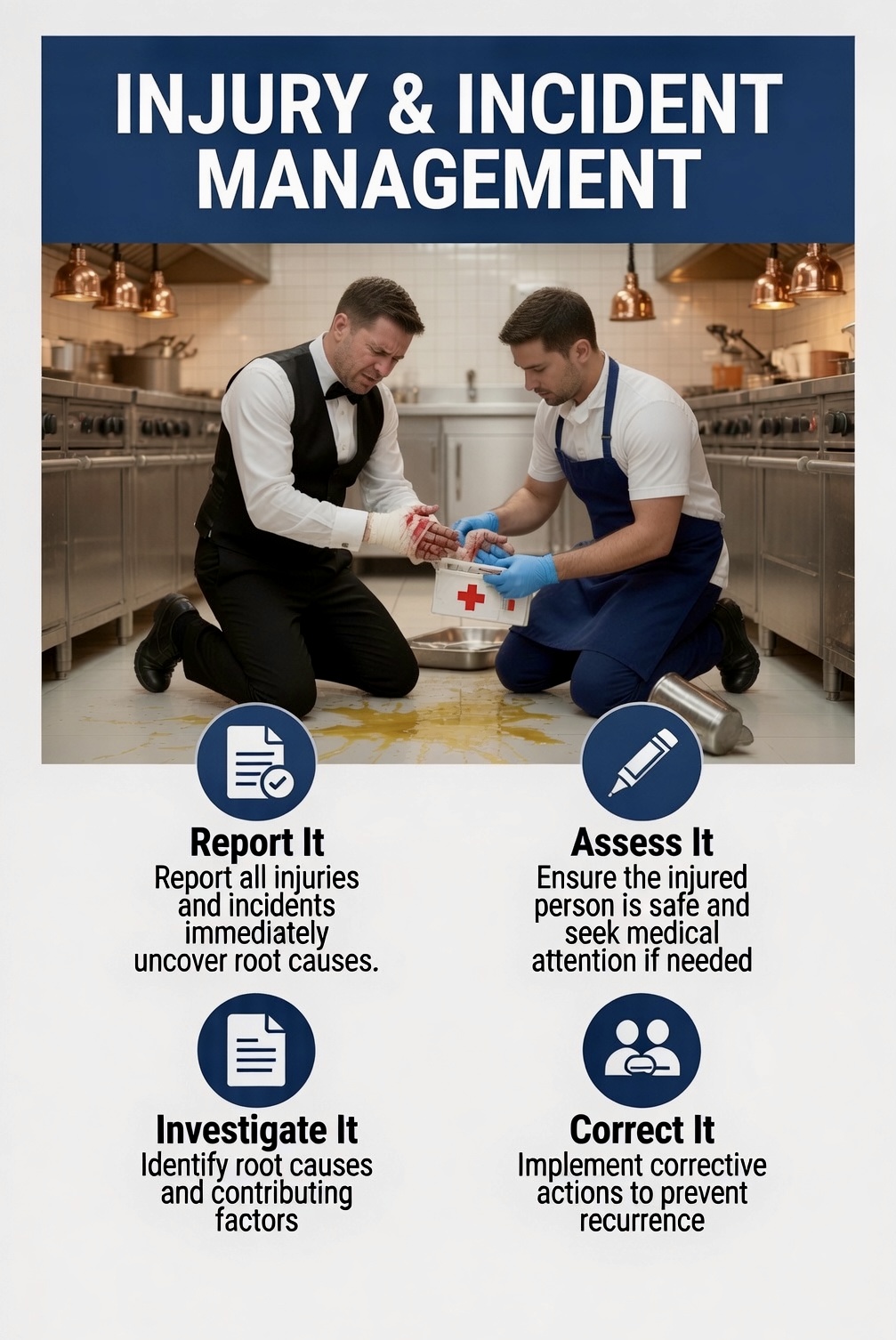
We provide hands‑on methods to help restaurants reduce injury frequency and severity through:
TRIR & DART tracking
Root‑cause analysis
Corrective action planning
Workers’ compensation oversight
Insurance carrier coordination
EMR improvement strategies
This structured approach lowers costs and improves operational stability.
This structured approach lowers costs and improves operational stability while maintaining insurance cost on the lower of rates, higher employee moral.
07
Slip, Trip & Fall Prevention
Daily cleaning routines,
Non‑slip mats, Spill response protocols

Have additional inquiries?
We are here to help. Let's engage in a conversation.
Tags:
One response
Hi, this is a comment.
To get started with moderating, editing, and deleting comments, please visit the Comments screen in the dashboard.
Commenter avatars come from Gravatar.